


BillSave Case Study: Five Offers, a $32.88 Difference
BillSave Case Study: Five Offers, a $32.88 Difference
How much can an electricity bill change when the household uses exactly the same amount of energy at exactly the same times, but the electricity offer changes?
A new BillSave real-usage case study applies five Alinta Energy residential offers to one complete month of the same household interval data. The estimates range from AUD $146.68 to $179.56 including GST—a difference of $32.88, or 22.42% of the lowest estimate among the five offers.
No interval was moved and no energy-saving behaviour was assumed. The difference came from the tariff rules applied to the same load profile.

BillSave used the same 1–31 August 2026 Dataset for all five calculations. Every result is labelled Estimated because two half-hour records in the shared Dataset were estimated rather than measured as Actual.
One household profile, five different tariff structures
The comparison uses the Single Phase System Site available through the IAMMETER public Demo Account. For August 2026, the Dataset contains:
- 31 complete days;
- 1,488 half-hour intervals;
- 347.51 kWh of grid import;
- no grid export;
- no separately billed Controlled Load; and
- two estimated intervals on 10 August from 19:00 to 20:00.
BillSave treated the same load profile as a hypothetical residential customer in the NSW Ausgrid region, then calculated five selected Alinta Energy offers covering Single Rate, Time of Use and a capped midday free-usage period.
The lowest estimate among the selected offers was HomeDeal Smart — Single Rate at $146.68. The highest was Standing Offer — Time of Use at $179.56. Between them were HomeDeal Smart — Time of Use, Standing Offer — Single Rate and Solar Sharer Offer — Time of Use.
The complete BillSave article contains the individual estimates, represented rates, official source links and an explanation of why each tariff structure responded differently to this household profile.
Why interval data changes the comparison
A monthly total can show how much electricity a household used, but it cannot show when that electricity was used. Timing becomes important when an offer includes peak and off-peak periods, free-use windows, demand charges or other interval-sensitive rules.
In this case, the two Single Rate and three Time of Use offers did not respond in the same way to the household's evening demand and midday consumption. The Solar Sharer offer included a midday free-use period, but its charges outside that window meant it was not the lowest estimate for this particular profile.
This does not mean that Single Rate is always better than Time of Use, or that a free-use offer cannot benefit another household. A household with daytime EV charging, electric heating, solar export or more flexible loads could produce a different result and a different ordering.
For a broader explanation, read why actual interval data provides a more useful electricity-plan comparison.
The source data can be inspected in the IAMMETER Demo Account
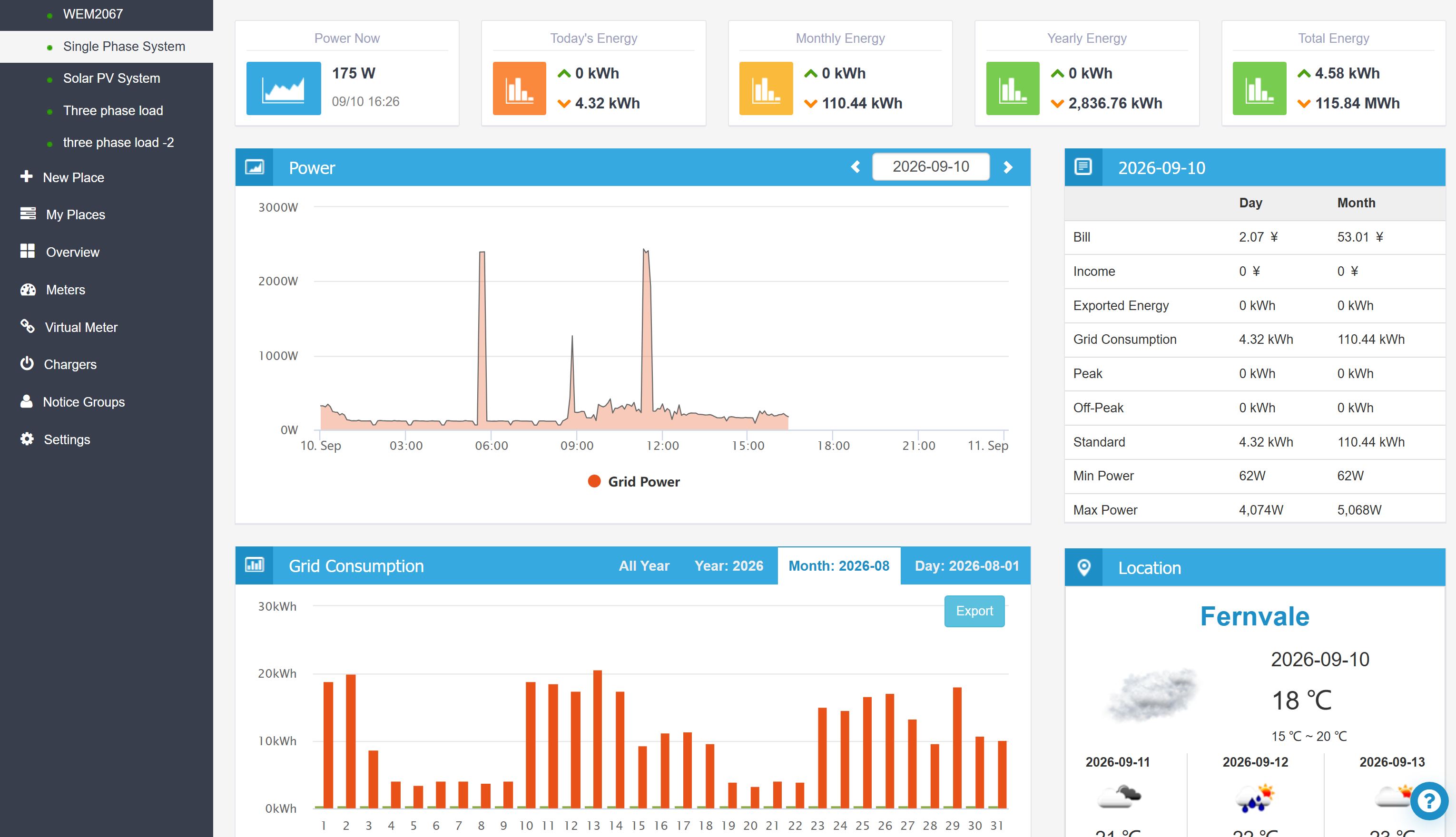
The upper chart shows a sample day of household power, while the lower chart shows daily grid consumption during August. BillSave used the complete August half-hourly Dataset, not the partial-day figures visible at the top of the screenshot.
The source is a real residential load profile made available through the IAMMETER public Demo Account, not a synthetic constant-load Dataset. You can open the Single Phase System Demo Site to inspect its detailed power and energy history.
This demonstrates a practical use for monitored energy data beyond viewing dashboards and monthly consumption. Interval data can be reused to calculate how supported tariff rules would have affected the same historical load profile.
IAMMETER users can choose Continue with IAMMETER in BillSave and authorise access to an IAMMETER Cloud Site, avoiding a manual CSV export. IAMMETER is an optional data connection rather than a requirement for using BillSave.
BillSave also works without an IAMMETER account
BillSave is an independent electricity bill calculation and Offer comparison platform. Users without an IAMMETER device or Cloud account can create a BillSave account with their email and upload their own 5, 15 or 30-minute interval CSV data.
Keeping the Dataset and billing period fixed makes the comparison easier to audit: each selected Offer receives the same input rather than a different assumed household profile. BillSave also retains data-quality labels so an Estimated input is not presented as fully measured evidence.
To try the workflow:
The calculations in this case study are estimates for comparison, not the Demo Site's actual retailer bills, financial advice or a guarantee of eligibility, availability or savings. The selected HomeDeal versions became effective on 5 August 2026; their published rules were applied to the complete natural month as a controlled illustration. Users should confirm current official rates, network and meter requirements, contract conditions and eligibility with the retailer before making a decision.